
Whatever dies, was not mix’d equally – John Donne
Many years ago, I saw a fringe theatre company do Hamlet. It was a bit rough at the edges but the most remarkable thing was that 4 different actors took the role of the Danish prince. Other characters were played by more than one actor, too.
They swapped brightly coloured tunics so it wasn’t confusing; in fact, a switch of actors in the main part helped flesh out Hamlet’s ever-changing moods.
They even managed to send the concept up, with a tall actor handing over the lead to a short one, so the audience could laugh and get the idea at the same time.
It was so liberating, so exciting. I’d never seen anything quite like it and hardly have since, not in conventional theatres.
More recently, I had a similar sensation seeing Hamilton, the musical. Young Latino, Asian and black actors portray the old white founding fathers of America. It took my breath away – how audacious!
The boldness of the idea is matched by the smartness of the staging, the brilliantly original music and lyrics – plus the theme of Alexander Hamilton as an immigrant which echoes the performers being outsiders too.
Conventionally, theatre stays within its own fourth wall, beyond which sits an audience willingly suspending its disbelief. The actor faithfully portrays a character as s/he really is, was or would be in real life.
The entire cast keeps up the myth that what’s happening on stage is just as if it was nature itself, so that each actor looks like the person they’re playing, wears the right clothes and behaves just naturally, like they really are that character.
Same goes for the whole situation: the world on stage is true to life, as close a reflection of reality as it’s possible to be. And all this so we can fit what we’re watching into our own existence: it’s recognisably life as we live it.
But, as Brecht – the great proponent of epic, non-naturalistic theatre – said: Art isn’t a mirror to hold up to reality. He went on to say that it’s a hammer, which seems a bit brutal, but you get the idea. Don’t regard the stage as a faithful reflection of reality, but rather an alternative way of looking at the world and the people in it.
Personally, I’ve always preferred it when theatre breaks the rules of naturalism because it tends to be more exciting, unexpected and inventive.
All my most magical and memorable theatre visits – images and ideas that make you think and feel something different – are of ‘conceptual’ productions, or at least extraordinary moments inside an otherwise ‘normal’ show. Productions which aren’t trying to cover up the fact that it’s all pretend; instead they positively embrace the idea, play it up to present more than a mere 3D version of the script.
Here are just a few examples, personal favourite moments when breaking the fourth wall enabled a show to transcend the norms of perception and give a more powerful insight into its message, themes and ideas.
The stampede scene in The Lion King musical; the house collapse in Stephen Daldry’s version of An Inspector Calls; Robert Lepage spiralling vertiginously up and down, surreally lit, in Needles and Opium. And, from a long time ago – I saw it as a theatre student and it changed my view forever – Peter Brook’s Midsummer Night’s Dream in a great white box with trapezes, swings and spinning plates thrown from one bendy pole to another.
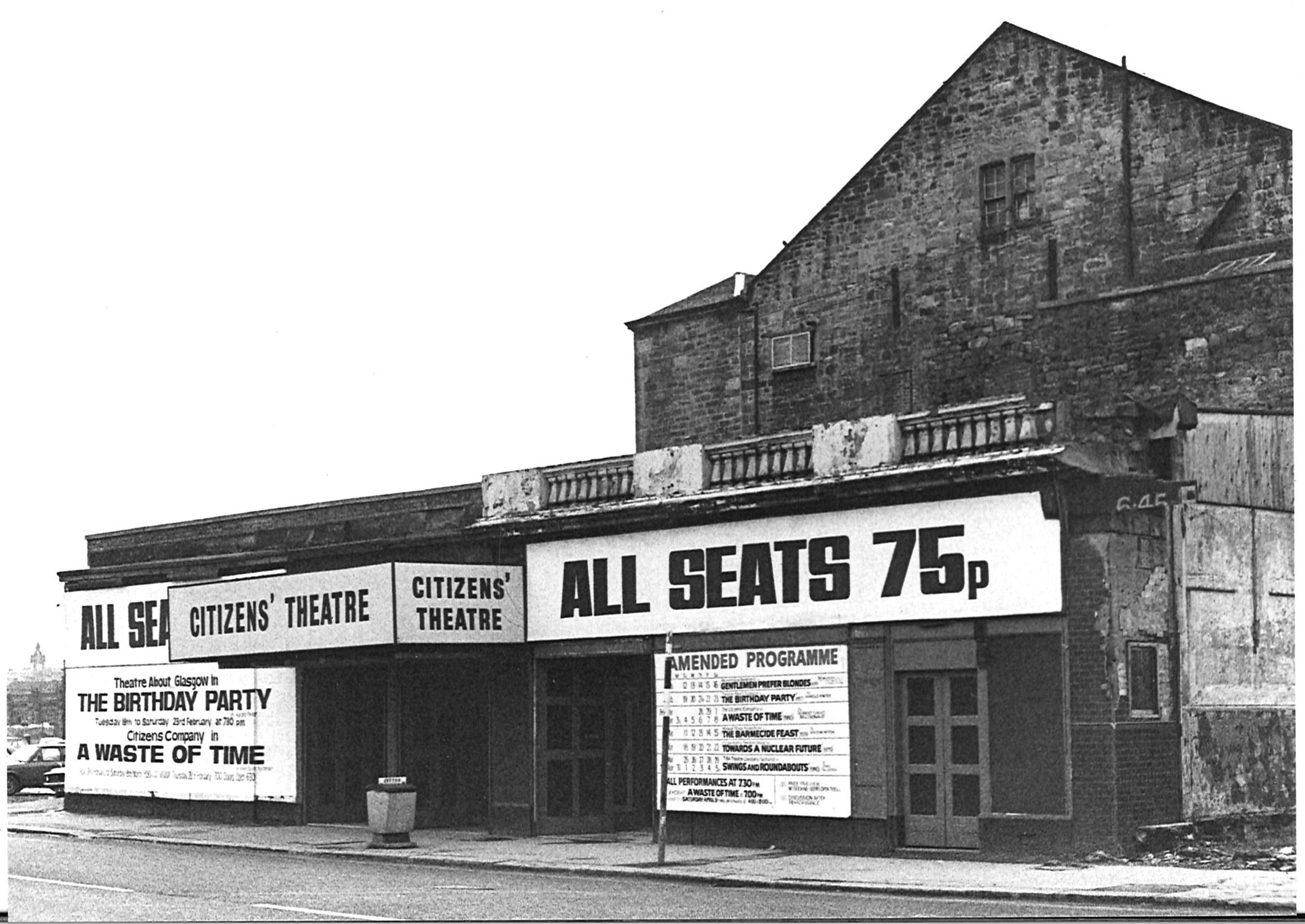
Another instance comes from my own professional alma mater, the Citizens’, Glasgow: a tiny moment within a relatively true-to-life production of an Italian comedy. David Hayman, holding a cup of coffee (there’s no liquid, it’s painted brown inside, just another trick of the trade), turned and flicked the cup towards the front row, who flinched. A momentary crack in the fourth wall, but a funny, swift reminder that we are witnessing illusion, not a literal representation.
By contrast, I can’t think of a single wholly naturalistic production whose images and messages have stayed with me.
The box-set, fastidiously crafted props, costumes and authentic characterisation may be admirable technically but they don’t cut the mustard when it comes to having a lasting effect, bringing an idea or feeling right home.
Why limit stage and spectators by faking a simulacrum of life when the whole exercise of theatre is capable of such illusion, imagination and flights of fancy?
It’s all pretence anyway. You can do anything, be anyone, turn any object into another and no need to explain why. And these days technology, especially lighting, sound and the use of film, can surpass realism even further.
Now, there seem to be more and more examples of productions ready to defy the rules of verisimilitude.
This isn’t just style – it’s also the actors. It seems like real change is happening. Especially in how shows are being cast.
Recently, to give just a few instances, there’s been the Donmar Warehouse’s all-female cast Shakespeare trilogy (Julius Caesar, Henry IV, The Tempest) and a black actress as Hermione in Harry Potter and the Cursed Child (smart casting even though there’s no reason the character should be white).
The Globe Theatre, home of Shakespeare, has just done a production of Richard II where every single person in this company is a woman of colour: all the actors, stage management, the directors and designers – the first time this has ever been done on a major UK stage.
And so many female actors as Hamlet these days. It’s not a new idea – star actresses like Sarah Siddons in the eighteenth century and Sarah Bernhardt in the nineteenth played the prince, but the trend now is much greater.
In some productions the character stays a man, just played by a woman. Other Hamlets have been androgynous (Maxine Peake). Some are fully female – the princess of Denmark. What happens then to Frailty, thy name is woman? The story and other characters are bound to change as well, so that the imaginative possibilities provoked by a change of gender spread to the whole show.
Perhaps the biggest hint of naturalism being on the skids comes from recent instances of casting in television and film, usually more naturalistic than theatre. I was delighted to see David Oyelowo as Javert in the recent BBC Les Miserables. Not a rousing song to be heard, this is a deliberately faithful-to-the-original naturalistic drama, with a black actor playing a white character.
In the 2018 film Mary Queen of Scots Adrian Lester plays Queen Elizabeth’s ambassador to the Scottish court and Gemma Chan is Bess Hardwick. This seems more unusual in a blockbuster period drama. The film’s director, Josie Rourke – a woman, from a theatre background – reckons cinema (a film set is a very white, male place) is about 10 years behind the live performing arts.
We shouldn’t get too carried away. This trend away from naturalistic casting opens up a much bigger question.
Last November, Adrian Lester joined with Lenny Henry and others to deliver a letter to 10 Downing Street calling for tax breaks to try and overcome the crisis of the lack of diversity amongst those working in the film and TV industry.
It seems that the horrendous political realities of inequality still impede artistic progress – it’s not just a question of colour-blind casting by a few directors and producers.
The greatest barrier to non-naturalistic casting isn’t a lack of imagination on the part of directors nor audiences yet to open their minds.
The white elephant in the dressing room is the lack of opportunities throughout the whole of life for women, disabled people, and people from black, Asian and minority ethnic backgrounds.
It’s our old enemy, the deep-rooted issue of inequality and the skewed representation of society as a whole, hardly a problem exclusive to film, stage and TV.
We still live within a massively, blatantly unequal system and it seems to take ages to make the glacial changes we’re seeing a little of nowadays. How long, oh lord, how long?
Is it time, in Scotland at least, to speed things up with a Sweden-style agreement requiring production funding to directors, writers and producers to be distributed 50/50 between men and women?
Might be a start.
by Paul Bassett, Glasgow, August 2019.


 STAGE LEFT